A Letter to You
The Art of Coming Back to Yourself
Sheila Mae Balaga
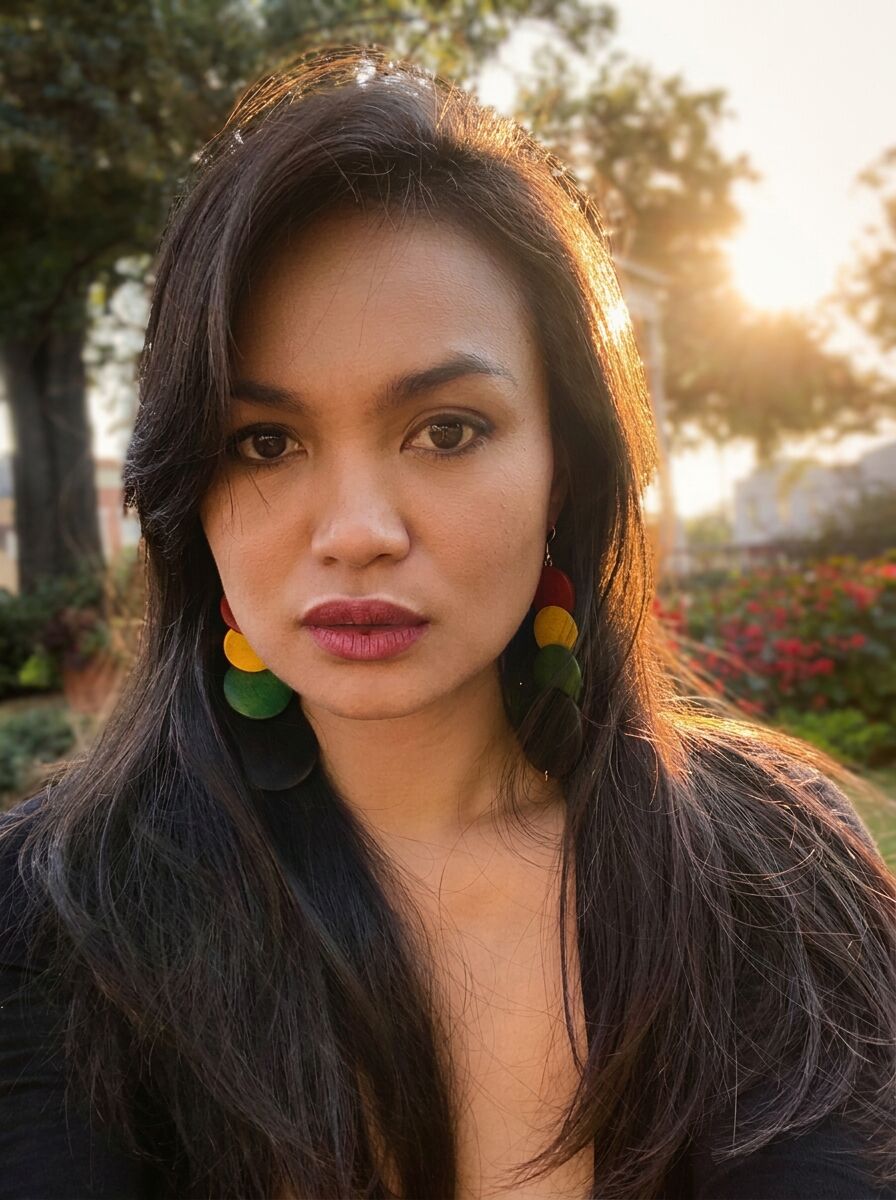
Among the billions of souls wandering this noisy, beautiful planet, there is me. Quiet and observant by nature, living largely within my own little world, wandering through life and learning, like everyone else, how not to lose myself in it.
The path that led me to create Tap to Shift was deeply personal. It wasn’t born from a business strategy or an ambition to teach people how to live. It came from the one experience I knew firsthand: living. It came through the ordinary pressures of everyday life, the seasons that brought me to my knees, and the moments when I had to learn how to find my way back to myself. I took what helped me and began imagining a space where other people could explore what helps them. Not because my answers should become theirs, but because I believe every human being deserves the opportunity to discover their own.
Life has handed me experiences that were emotionally intense and deeply challenging. There were times when the world outside of me felt overwhelming, when so much of what was happening was beyond my control, and when I didn’t know how things would unfold. During those times, one of the safest places I could return to was within myself. I learned to become quiet enough to hear my own voice, to notice what my body was telling me, and to find ways to support my nervous system through what I was experiencing. It didn’t happen overnight, and it certainly didn’t mean I always knew what I was doing. Sometimes I listened. Sometimes I forgot. Sometimes I found myself caught in the same patterns, fears, and reactions. But I kept learning how to return.
Listening to myself didn’t make life’s challenges disappear. It didn’t suddenly make the people around me behave differently or turn difficult circumstances into easier ones. But it helped me move through some of my hardest seasons, including depression, without completely losing myself. It helped me remember who I was beneath the pressure, the expectations, and the relentless pace of a world that always seems to be asking us to become something more. I couldn’t always control the reality unfolding around me, but awareness began changing how I met it. I could pause before reacting, recognize what was happening within me, and consider what I wanted to do next. Sometimes that meant speaking up. Sometimes it meant stepping away. And sometimes it meant simply allowing myself to experience a difficult moment without demanding that I immediately know how to resolve it.
And something beautiful began to happen as I learned to listen to myself. I began appreciating the individuality of others in an entirely different way. There is a quiet power in someone who can remain rooted in who they are while allowing others the freedom to be who they are, too. Someone who can recognize their own needs, listen to their inner voice, and decide for themselves what feels true. And perhaps what made me appreciate this even more was realizing how easily we can lose touch with that part of ourselves while trying to find our place in the world.
After all, we are shaped by the world around us long before we begin questioning its influence. From an early age, we absorb messages about who we should be, what we should want, how we should feel, and what a successful life is supposed to look like. Without even realizing it, we can begin measuring ourselves against those expectations. We learn to perform, to please, to seek approval, and sometimes to silence parts of ourselves just to belong. Over time, the voices around us can become so loud that we can barely hear our own. But I don’t believe our authenticity simply disappears. Sometimes, I think we just lose the quiet space to hear it.
That realization changed how I see people. It taught me to respect the inner authority within every individual. I don’t want to tell someone what their pain means, what they should believe, or who they should become. I don’t know their entire story. I don’t know what they’ve lived through, what their body has carried, or what they need in order to feel supported. And I would never presume to understand someone else’s experience better than they understand it themselves. What matters to me is creating a space where they can become curious about those things for themselves. I believe, from the core of my heart and soul, that our awareness, our inner voice, and the signals of our nervous system are worth listening to. They can help us notice what needs attention, recognize what we’re experiencing, and become more connected to ourselves.
That is the heart of Tap to Shift. I am not here to choose a path for you. How could I? I don’t know what is best for you. I don’t know what helps you heal, what motivates you, what brings you peace, what helps you regulate, or what makes you feel most alive. I haven’t lived inside your body. I haven’t walked in your shoes or experienced the world through your eyes. Only you can come to know those things for yourself.
I can only hand you a lamp so you can see yourself more clearly.
And that is where Tap to Shift began. Somewhere along my own journey of learning how to return to myself, I started wondering what it might look like to create a space where others could do the same, in their own way and at their own pace. A space that wouldn’t offer them my answers, but would gently invite them to explore their own. Because what I had come to appreciate through my own experiences was that sometimes, the most meaningful thing we can offer another person isn’t an answer at all, but the space to discover one for themselves.
We have become so accustomed to reaching outside ourselves for answers. When something happens, we often look for someone or something to tell us what it means, what we’re feeling, why we’re feeling it, and what we should do next. And understandably so. We live in a world overflowing with information, opinions, advice, and expectations. Social media, mainstream media, advertising, the people around us, and the culture we live in all influence what we see, hear, believe, fear, and desire. And now, we have artificial intelligence, an extraordinary technology that can give us answers within seconds, often in words that sound wiser than our own.
And listen, I love AI. I use it myself, and I find it fascinating how much technology has opened up possibilities for us to create, learn, accomplish things more efficiently, and explore perspectives we might never have considered. But as I began reflecting on how easily we can turn to technology for almost anything, I found myself wondering about the relationship we have with our own awareness. With so many answers available at our fingertips, how often do we give ourselves the opportunity to pause and listen to what is happening within us before seeking an explanation elsewhere?
I don’t believe the answer is to turn away from technology. What interests me is finding a balance between everything it can offer us and the intelligence we already carry within ourselves. Technology can provide information, introduce new perspectives, and help us make sense of complicated things. But our own experiences also deserve our attention before someone, or something, begins interpreting them for us. And perhaps that is what I wanted to explore through Tap to Shift: what might happen if technology didn’t always rush to provide an answer, but instead created a little room for us to discover our own?
Life has a way of moving so quickly that we can forget to notice ourselves in the middle of it. We move from one responsibility to another, one conversation to the next, carrying thoughts, emotions, and sensations that we may not even realize are there. The tension in our shoulders, the subtle change in our breathing, the feeling that something has unsettled us without quite knowing why. Somewhere in the midst of all that movement, we can become so occupied with what is happening around us that we lose touch with what is happening within us. But even a small pause can create an opportunity to notice. To breathe, to become curious, and perhaps to give our nervous system a little room to settle. Not necessarily to change what we’re experiencing, but to become more present with it.
I think there is something beautiful about that, because not every pause has to bring peace, and not every reflection needs to lead to some profound realization. Sometimes awareness is simply noticing that we’re tired, that something has hurt us, or that we’ve been carrying more than we realized. Other times, it’s recognizing that we’re happy, grateful, or content with where we are. We don’t always have to be searching for something within ourselves that needs fixing. Sometimes, there is enough meaning in simply getting to know the person we already are.
That is what Tap to Shift invites you to explore through simple practices: breathing, tapping, noticing, reflecting, and writing. It offers questions and gentle activities that encourage you to turn your attention inward and become curious about your own experience. It doesn’t rush to explain what you’re feeling or tell you what your reflection means. It asks, and then it leaves room for you to respond. Over time, you can revisit what you’ve written and begin noticing patterns that may have followed you through different moments of your life. Not so the app can understand you, but so you can begin to understand yourself in ways you may not have considered before.
Something interesting can happen when we begin recognizing those patterns. We may discover that what once felt like an automatic reaction doesn’t always have to determine what happens next. We might notice when something doesn’t feel right, recognize an unspoken need, find the courage to have an honest conversation, or simply allow ourselves to respond differently than we would have before. Sometimes, these are small choices that no one else would even notice. But those small choices can change how we experience a moment, how we relate to another person, and occasionally, the direction our lives begin to take.
Of course, none of this means we suddenly gain control over everything that happens to us. Life will continue to unfold in ways we cannot always predict, and people will continue to make choices that are beyond our influence. But what I’ve come to appreciate is that awareness can change how we participate in what unfolds. And to me, that is where autonomy begins. Not in becoming immune to the world around us, or in having complete control over our circumstances, but in developing a relationship with ourselves that allows us to remain connected to who we are, even as life continues to change.
This understanding shaped one of the most intentional decisions I made while building Tap to Shift. I wanted the technology to support self-awareness without becoming the authority over it. There is no AI inside the app interpreting your reflections, explaining your emotions, or deciding what your experiences mean. What you choose to write comes from you, and whatever you come to recognize through that process belongs to you. I believe there is something deeply personal, perhaps even sacred, about the discoveries we make when we allow ourselves to listen within. I wanted to honor that by leaving the meaning of those discoveries in the hands of the person experiencing them.
That doesn’t mean I believe we should never seek another perspective. Sometimes, hearing how someone else understands something can help us recognize possibilities we hadn’t considered. And technology can be useful in that way, too. If you choose to explore your reflections with your own AI assistant, Tap to Shift provides a prompt you can copy and use outside the app. But that choice is entirely yours. Nothing is automatically sent to AI for interpretation. You decide what you want to share, whose perspective you wish to explore, and what meaning you ultimately take from the experience. The app doesn’t diagnose you or claim to understand you better than you understand yourself.
I also have enormous respect for the people who dedicate their lives to understanding and caring for human beings. Doctors, therapists, mental health professionals, and other trained practitioners bring knowledge, education, and experience that can help us navigate things we may not be equipped to face alone. Tap to Shift was never created to replace that care, nor do I believe self-awareness should take its place. In fact, one of my hopes is that becoming more familiar with our own experiences may help us express ourselves more clearly when we seek support. Sometimes, being able to recognize what we’re feeling, what we’ve been noticing in our bodies, or what has been troubling us can make it easier to begin a meaningful conversation with someone who can help.
I’ve never understood autonomy to mean that we must have all the answers or figure everything out by ourselves. To me, it also means recognizing when we need another person’s knowledge, care, or perspective while remaining an active participant in our own lives. We can listen to ourselves and still welcome the wisdom of others. We can trust our experiences while remaining open to learning. And we can honor our individuality without forgetting how deeply connected we are to one another. There is room for all of it.
Perhaps that is why I think of Tap to Shift as more than something we use on a screen. My hope is that whatever someone discovers within the app can become something they carry into the life they’re already living. Into an ordinary conversation, a difficult decision, a relationship, a moment of uncertainty, or even a moment of joy. I don’t want people to become more dependent on another piece of technology to navigate their lives. I would much rather it help them become more present in the world beyond it, where their choices, relationships, and experiences continue to unfold.
And when I think about everything that brought me here, from the seasons when I struggled to find my own footing to the quiet moments when I began learning how to listen to myself again, I realize that this was the intention all along. To create a little space between what happens and what comes next. A space where we can pause long enough to notice ourselves before the noise of the outside world takes over. Where we don’t have to perform, explain, improve, or become someone else just to deserve our own attention. Where we can simply arrive as we are, with whatever we happen to be carrying, and begin there.
I don’t know what you will discover in that space, and I wouldn’t presume to know where your path should lead. Your experiences, your circumstances, and the meaning you make of them are uniquely yours. But I hope you find something valuable in giving yourself the opportunity to listen. Perhaps it will be a realization you hadn’t considered before. Perhaps it will be a familiar feeling you finally have words for. Or perhaps it will simply be a moment of quiet in the middle of a busy day. Whatever it may be, I hope it brings you a little closer to yourself.
Because no matter how extraordinary technology becomes, I hope we never forget the extraordinary intelligence that exists within the human experience. Our capacity to feel, question, notice, imagine, create, connect, and choose. Technology can extend what we’re capable of doing, and AI can offer us possibilities we might never have imagined. But there is something uniquely human about the meaning we make from our own experiences, something that cannot be reduced to the speed of an answer or the sophistication of a machine.
And perhaps that is what I hope we remember most. That we can welcome knowledge without surrendering our curiosity, seek guidance without abandoning our autonomy, and embrace technology without losing touch with the awareness within us. We don’t have to choose between appreciating the extraordinary possibilities of the world around us and honoring our own capacity to understand, reflect, and make meaning of our experiences. There is room for both, and I believe that learning to recognize this balance is part of what it means to participate consciously in our own lives.
After all, technology is something we create, and while AI can offer us remarkable answers, it is still our human capacity to question, imagine, feel, and choose that gives those answers meaning. And perhaps that is why, at the heart of it all,
I believe the most powerful intelligence in this world is human intelligence.
I hope we continue to honor it, nurture it, and use it consciously and wisely.
And wherever life takes you, I hope you always find your way back to yourself.
From my awareness to yours,
Sheila Mae Balaga
Founder of Tap to Shift